carsrequest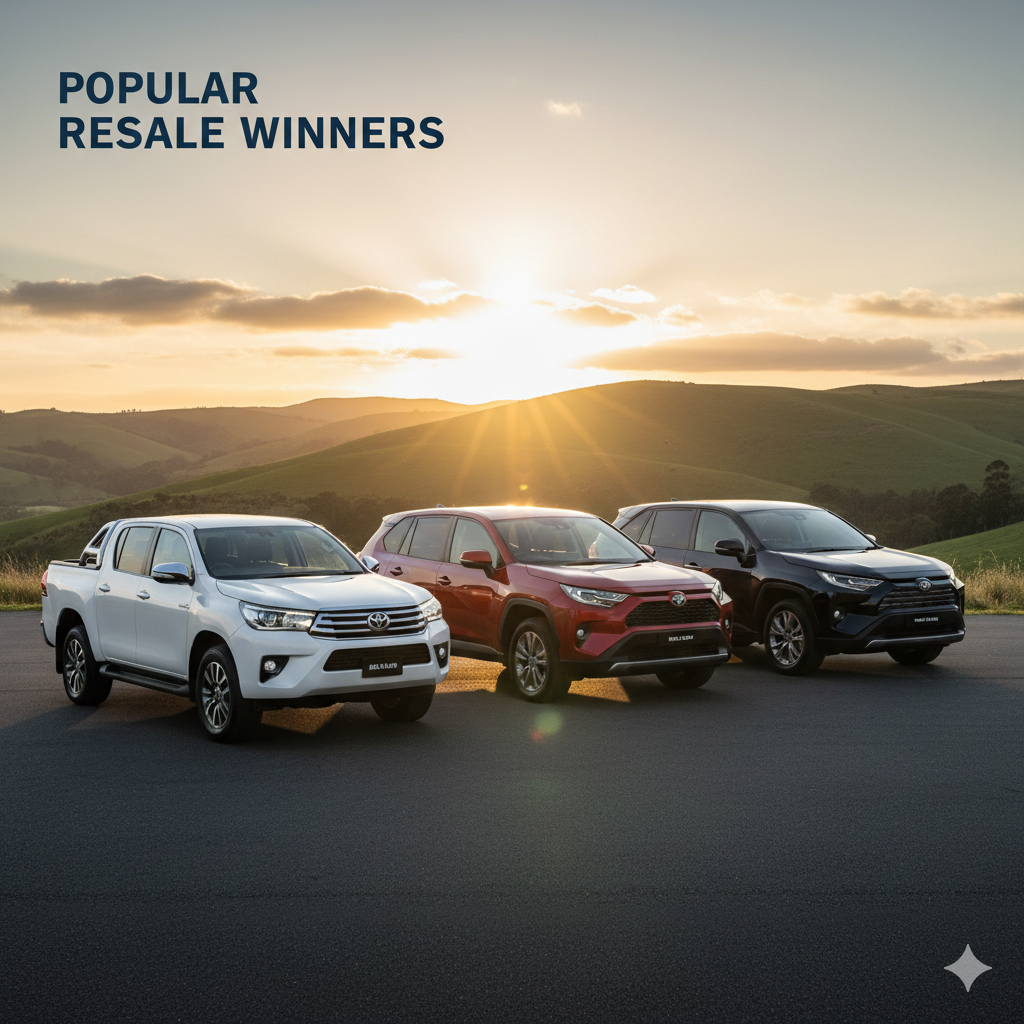
Buying a car in Africa rarely ends with only one purchase — resale value matters. Whether you’re importing a vehicle or buying locally, understanding which models keep their value (and which crater) can save you hundreds of thousands of shillings over time. This long blog, “The Resale-Value Kings in Africa”, practical guide that breaks down 5-year depreciation, explains why Toyota dominates, examines the rise of Chinese brands, and calls out the shockingly bad resale-value cars — with real-world examples, calculation method, and buyer action steps.
Quick takeaway (if you’re in a rush)
-
Toyota models (Hilux, Land Cruiser/Prado, RAV4, Harrier, Corolla/Premio/Axio) are the most reliable resale winners across Africa: predictable demand + easy parts = stronger retained value.
-
Chinese brands (BYD, Haval, Geely, Changan) are improving rapidly, but, on average today, still depreciate faster than Japanese rivals — mainly because of parts networks, market perception, and service maturity.
-
Shockingly bad resale tends to hit some luxury European sedans and niche/low-volume models (big executive German sedans, some early EVs, low-support luxury brands).
-
Five-year depreciation varies widely by model and market. Use the simple formula below and the model-group estimates in this guide to estimate future value.
How we compute 5-year depreciation (simple, repeatable method)
Use this formula:
Value after 5 years = Purchase price × (1 − 5-yr depreciation rate)
Example (digit-by-digit math for clarity):
-
Start price = KES 4,000,000
-
If 5-yr depreciation = 30% (0.30)
-
Remaining fraction = 1 − 0.30 = 0.70
-
Multiply: 4,000,000 × 0.70 = 2,800,000 KES after 5 years
For the same KES 4,000,000 purchase, with different depreciation rates:
-
Average case (45%): 1 − 0.45 = 0.55 → 4,000,000 × 0.55 = 2,200,000 KES
-
Poor case (65%): 1 − 0.65 = 0.35 → 4,000,000 × 0.35 = 1,400,000 KES
These are illustrative examples. Use the model-specific ranges below to estimate your vehicle’s realistic 5-year value.
Five-year depreciation bands — model groups & estimates (2019–2021 purchases sold in 2024–2026)
These ranges are educated, conservative estimates reflecting typical African market behavior. Actual numbers vary by country, mileage, condition, trim, color, and import timing.
A. Toyota core models — Resale kings
-
Hilux, Land Cruiser (Prado, 120/150 series), Toyota Corolla/Premio/Axio, RAV4, Harrier, Hiace
-
Estimated 5-yr depreciation: 25% – 40%
-
Example: KES 4,000,000 × (1 − 0.30) = KES 2,800,000 (best case within the band)
-
B. Strong Japanese contenders
-
Honda CR-V, Mazda CX-5, Nissan X-Trail
-
Estimated 5-yr depreciation: 35% – 50%
C. Mid-tier general imports
-
Mitsubishi Outlander, Subaru Forester
-
Estimated 5-yr depreciation: 40% – 55%
D. Chinese makes (rising but volatile)
-
BYD, Haval, Geely, Changan, GAC
-
Estimated 5-yr depreciation: 45% – 70% (wide band — depends heavily on model success & service rollout)
E. Luxury/low-volume European models
-
High-end Mercedes S-Class, BMW 7 Series, Jaguar XJ, older Land Rover/Range Rover models (unmaintained)
-
Estimated 5-yr depreciation: 50% – 80% (can be catastrophic if service history is missing)
Why Toyota dominates resale value in Africa (the mechanics)
-
Parts & service network: Toyota parts are abundant, and mechanics know the platforms — downtime is short, and repair costs are predictable.
-
Perception + demand: Toyota equals reliability in buyer psychology. This keeps demand (and prices) high for used Toyotas.
-
Simplicity & longevity: Proven, less-complex engines (esp. diesel and naturally aspirated petrols) survive high km with fewer failures.
-
Fleet adoption: Government, NGO and corporate fleets repeatedly choose Toyotas, generating steady secondary demand.
-
Model depth: Toyota offers a wide range (from Probox to Hilux to Land Cruiser) — buyers know replacements and service paths exist.
Chinese brands — rising stars, but resale still behind (why)
Chinese brands have improved dramatically: design, standard features, and initial build quality are now competitive in many segments. But resale lags because:
-
Parts & service network is still expanding — in many African markets, spares remain limited.
-
Brand trust takes time — buyers often prefer proven Japanese reliability.
-
Software/updates and long-term reliability are less battle-tested in African climates.
-
An initial price advantage means depreciation in cash terms can still be high (buyers see steeper percentage declines if demand is lower).
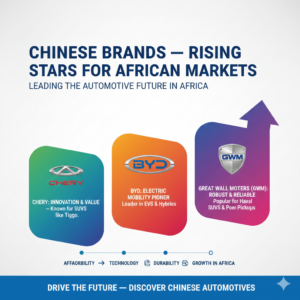
That said, models with solid manufacturer support and warranty (e.g., BYD in markets where BYD has dealer investment) can retain value much better than the general Chinese average.
Shockingly bad resale-value cars (what to avoid)
Certain categories consistently underperform on resale:
-
Large European executive sedans (older models)
-
Mercedes S-Class, BMW 7 Series, Audi A8 (older generations).
-
Why bad? High maintenance & parts cost, specialized servicing, rapidly outdated electronics.
-
-
Low-volume or niche luxury cars
-
Small production runs (exotic trims or rare editions) are hard to sell locally. Buyers prefer mainstream makes.
-
-
Early/unsupported EV imports (where charging infrastructure is weak)
-
Early EV models without local support experience higher depreciation due to battery concerns and limited local repair expertise.
-
-
Poorly maintained premium 4x4s (older Land Rovers, Jaguars)
-
High running costs + complex electronics = major price collapse unless fully serviced and documented.
-
-
Some European small cars with high parts import cost (e.g., Fiat, Alfa Romeo in markets with no strong dealer network.

Rule of thumb: Fancy electronics + Rare parts = Higher total cost of ownership → Lower resale value.
Model-level examples (illustrative, not guarantees)
Below are example five-year scenarios for a KES 4,000,000 purchase price (shows the value after 5 years using conservative midpoint depreciation):
-
Toyota Hilux (good trim) — estimated 5-yr drop ~30% → Value ≈ KES 2,800,000.
-
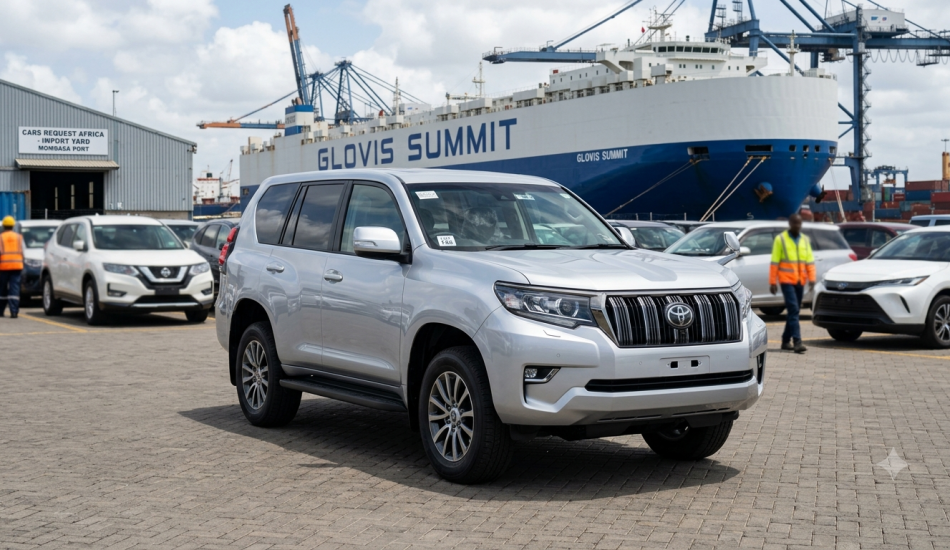
Toyota Land Cruiser Prado — ~30% → Value ≈ KES 2,800,000.
-
Toyota RAV4 / Harrier (hybrid) — ~30–35% → Value ≈ KES 2,600,000–2,800,000.
-
Honda CR-V / Mazda CX-5 — ~40% → Value ≈ KES 2,400,000.
-
BYD / Haval (popular SUV) — ~55% → Value ≈ KES 1,800,000.
-
Mercedes S-Class (older model) — ~65% → Value ≈ KES 1,400,000.
What drives resale up or down — the checklist
Factors that increase resale value
-
Low verified mileage (documented)
-
Full service history from recognized dealers/shops
-
Popular colour & trim (white, silver, black; mid-level trims)
-
Diesel or hybrid when local buyers prioritize economy
-
Simple, robust engine (fewer electronics)
-
Proven parts availability locally
-
Official dealer warranty/transferable service plans
Factors that destroy resale
-
No service history / rolled odometer suspicion
-
Accident history without professional repairs
-
Rare or non-standard engine/transmission for the market
-
Eventual major repairs looming (timing belt near replacement, battery aging in hybrids/Evs)
-
Niche colours or excessively customized interiors/exteriors
Strategy: How to minimize depreciation and protect resale
-
Buy the right model for your market — prefer Toyotas or established Japanese models where you live.
-
Choose mid-trim, popular colour — premium aftermarket options seldom recoup their cost.
-
Keep meticulous service records — stamps, receipts, and verified invoices add huge resale trust.
-
Pre-sell maintenance windows — replace timing belts, brakes, and consumables before sale.
-
Limit excessive customization — buyers prefer stock cars.
-
Time the sale smartly — list in the local market’s high season (e.g., pre-school term, before festive travel surges).
-
Use certified importers — verified auction reports and clean history attract better bids.
The Chinese car factor: Are they a bad investment?
Not necessarily. Chinese cars can be excellent short-term value buys (low initial price, strong features). But if your plan is buy → hold 5 years → resell at minimum loss, Chinese models generally carry more resale risk today.
When a Chinese import makes sense:
-
You plan to use it for 1–3 years and then trade down/up.
-
You get an extended manufacturer warranty with local support.
-
You prioritize features and low upfront cost more than long-term resale.
When to avoid:
-
If you plan to hold for 5+ years and need a predictable resale value.
-
If local service or parts availability is weak for that brand.
Shock-proof buying checklist (before you import a used car)
-
Request full auction inspection report (A — excellent down to E/F).
-
Confirm service/maintenance history and ask for receipts.
-
Verify VIN & mileage — run cross-checks with seller/Gov databases where possible.
-
Inspect underbody for saltwater corrosion (important for ship-rostered cars).
-
Confirm parts availability & local mechanic familiarity.
-
Get a pre-purchase mechanical inspection (3rd-party if possible).
-
Ask for an independent valuation to estimate 5-year depreciation for that exact car.
Why use Cars Request Africa (or a trusted importer) to protect resale value
A reputable importer does more than deliver a car. Here’s how they increase your chance of holding value:
-
Auction access + expert bidding ensures you don’t overpay at source.
-
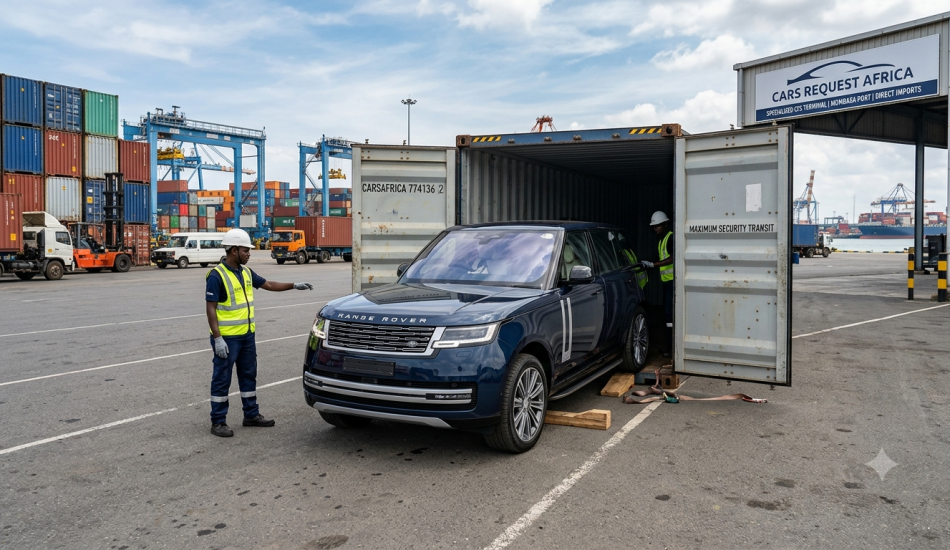
Rigorous pre-export inspections spot accident history, flood damage, rust, or odometer tampering.
-
Full documentation (auction sheets, service history) builds buyer confidence for resale later.
-
Correct shipping & port handling reduces underbody corrosion risks (common resale killers).
-
Market timing & pricing advice helps you buy models and trims that local buyers want 3–5 years later.
-
Optional refurbishment & warranties before delivery increase curb appeal and resale price.
In other words: a small extra fee for a top importer often results in less depreciation and a faster, higher-price resale — mathematically worth it for most buyers.
Long list: Cars that usually hold value well in Africa (5-yr winners)
-
Toyota Hilux (esp. diesel/4×4)
-
Toyota Land Cruiser family (70s, Prado, 200/300 series)
-
Toyota RAV4 & Harrier (hybrid variants especially)
-
Toyota Hiace (commercial vans)
-
Toyota Corolla variants (Axio, Premio)
Long list: Cars that often lose value quickly (5-yr losers)
-
Older large German executive sedans (Mercedes S, BMW 7), unless immaculate & dealer-supported
-
Low-volume European cars without local dealer networks (some Alfa, Fiat, Renault models)
-
Early EV models with uncertain battery condition & no service support inthe market
-
Some niche luxury SUVs and discontinued models with rare parts (older Jaguars, certain Land Rover models without steady support)
Final verdict — pragmatic rules for smart buyers
-
If resale value is a priority (you’ll likely sell within 5 years): prioritize Toyota or proven Japanese models — aim for hybrids or proven diesel trims.
-
If the total cost of ownership matters more than sticker price, calculate fuel + service + depreciation; sometimes a higher upfront cost (Toyota hybrid) wins long-term.
-
If you want the best technology/features for the least money and plan to upgrade frequently, consider Chinese models but plan for steeper depreciation.
-
If you want maximum resale across African markets, pick mainstream colours, standard trims, documented service history, and avoid rare customizations.