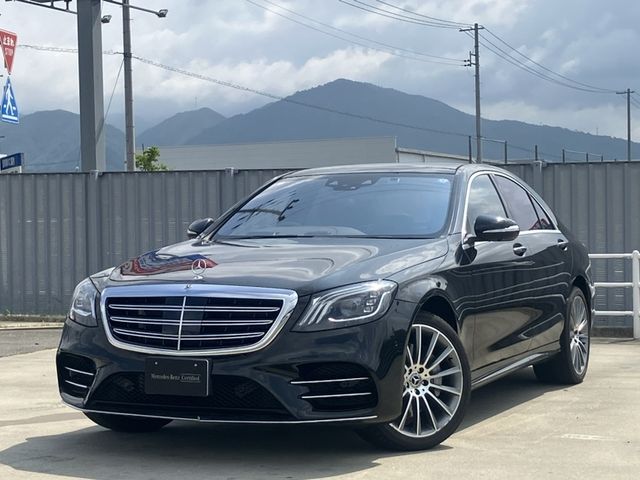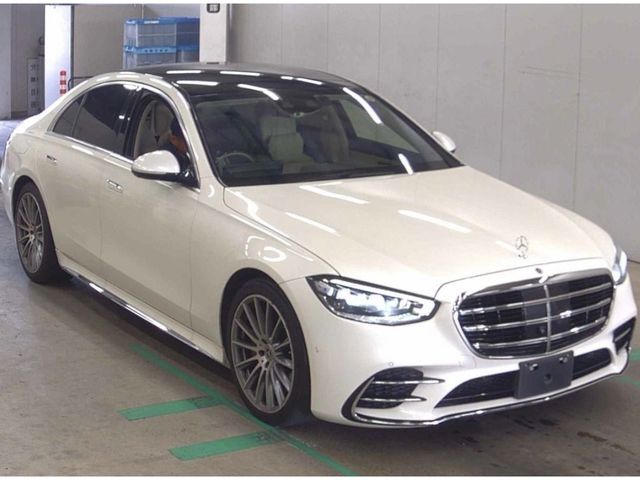
2022 Mercedes-Benz S400d 4MATIC AMG Line 3.0
2022 Mercedes-Benz S400d 4MATIC AMG Line
- Mileage
- 48,000 Km
- Fuel Type
- Diesel
- Transmission
- Automatic
MERCEDES-BENZ S400 INVENTORY
Compare Mercedes-Benz S400 vehicles available from international import sources and local stock, including prices, mileage, specifications and available variants.
2022 Mercedes-Benz S400d 4MATIC AMG Line
2020 Mercedes-Benz S400d Sports Limited 3.0
2019 Mercedes-Benz S400d 4MATIC AMG Line
2022 Mercedes-Benz S400d 4MATIC AMG Line
2022 Mercedes-Benz S400d 4MATIC AMG Line
2021 Mercedes-Benz S400d 4MATIC AMG Line
2022 Mercedes-Benz S400d 4MATIC AMG Line
2022 Mercedes-Benz S400d AMG Line
The Mercedes‑Benz S 400 is a mid‑level S‑Class trim that offers flagship‑grade luxury and tech with a slightly smaller engine than the S 450/S 500, aimed at buyers who want S‑Class presence and refinement but at a lower price and (usually) better fuel efficiency.
A four‑door, five‑seat luxury sedan on the S‑Class platform (W221, W222, or W223 depending on year), with a formal greenhouse, large rear doors, and a very low boot lip.
Boot space is about 18–19 ft³ (≈500–550 litres), with a fuel tank around 70–80 litres, depending on variant and market.
Different engine family to S 450/S 500: some S 400 generations use a 3.0‑litre V6 (often 3497–3500 cc) while others may use a 3.0‑litre inline‑six or even a hybrid‑assisted powertrain (S 400 Hybrid / BlueHYBRID) that blends a V6 with an electric motor.
Across common S 400 builds (especially W221–W222):
Engine: 3.0‑litre V6 turbo (M276‑family derivatives), in many cases around 3.5 L V6 turbo producing roughly 306–330 hp and 370–480 Nm torque, depending on tune and spec.
0–100 km/h: Usually in the 5.5–6.5 second range, with a governed top speed of 250 km/h (155 mph).
Transmission: 7‑ or 9‑speed automatic (7G‑TRONIC or 9G‑TRONIC), with rear‑wheel drive or 4MATIC all‑wheel drive depending on market and year.
Fuel economy: Around 7–8 km/l in real‑world mixed driving on many petrol‑only S 400s; hybrid S 400 variants can be slightly better, especially in city use, at the cost of added complexity.
The S 400 keeps the S‑Class halo feel:
Digital instrument cluster plus large central screen (MBUX or older COMAND depending on generation).
Heated leather seats, sunroof, keyless entry, panoramic camera, surround‑view system, sun‑blind for rear windows, and advanced lighting.
Safety suite: multiple airbags, ABS, ESP, Attention Assist, Active Brake Assist, PRE‑SAFE, cross‑traffic alert, and other S‑Class‑standard aids, giving high safety‑rating credentials.
Comfort touches: power front seats, multi‑zone climate, often power rear sides and rear‑seat comfort packages on higher‑spec builds.
Positioning:
Sits below S 450 / S 500 / S 560 / S 580 / AMG S 63 in performance and prestige but above base S 350/S 350d in many markets.
A good value‑entry into an S‑Class, especially the S 400 Hybrid / BlueHYBRID versions that offer S‑Class comfort with a slightly more economical powertrain.
Pricing hints:
In India, older S 400 units (2012–2021) often listed around ₹1.3–1.4 crore on‑road, with hybrid‑badged variants sometimes higher due to tech.
In African and GCC markets, spec‑heavy S 400s can trade in the multi‑million local‑currency bands used, with hybrid‑spec cars often commanding a premium over simple petrol S 400s.
The S 400 is comfort‑oriented and well‑built, but like other S‑Classes it can be expensive to fix when electronics, air suspension, or high‑tech modules go wrong.
Hybrid S 400 models add battery and inverter complexity, so service history and battery‑health records are important for used‑car buyers.
Reasonable maintenance intervals, especially oil changes, fluid refreshes, and software updates, greatly improve long‑term reliability and ownership satisfaction.
If you tell me whether you’re focused on S 400 petrol, S 400 Hybrid/BlueHYBRID, or a specific market (e.g., Kenya, UAE, India), I can give you a spec‑style table plus a tailored pre‑buy checklist for your region.
Choose the branch or team you want to contact.