carsrequest
How to Read a Japanese Car Auction Sheet Like a Pro (And Spot Fake Mileage)
Buying a direct import vehicle is one of the smartest ways for Kenyan motorists to drive a premium, low-mileage car while saving up to 20% compared to local showroom prices. However, making a major financial commitment on a vehicle that is physically thousands of miles away can feel daunting.
How do you ensure the vehicle’s condition matches the clean photos provided online? How can you guarantee the odometer hasn’t been rolled back before the car is loaded onto a vessel destined for the Port of Mombasa?
The answer lies in a single piece of paper: the Japanese Car Auction Sheet. Think of it as the ultimate automotive lie detector. In this comprehensive guide, we will break down exactly how to decode these sheets like an industry insider so you can shop our Cars for Import to Kenya live catalog with total confidence.
What is a Japanese Car Auction Sheet?
Before any used vehicle hits the bidding block at major Japanese auction houses (such as USS, CAA, or TAA), it must undergo a rigorous, independent evaluation by a certified inspector.
These inspectors are notorious for their brutal honesty. Because Japanese law enforces strict criminal penalties for odometer fraud and undisclosed structural damage, these auction sheets are the most transparent records a vehicle will ever have. The inspector evaluates the mechanical health, bodywork condition, and interior cleanliness, compiling all the data onto a standardized one-page form.
1. Decoding the Overall Auction Grades
At the top right corner of almost every auction sheet, you will find the Overall Grade alongside an Interior Grade (usually denoted by letters A, B, or C). This is the quickest way to filter out vehicles that don’t meet your standards.
Use this quick-reference matrix to understand what each grade means for your import budget:
| Auction Grade | What It Means for a Kenyan Buyer | Recommendation |
| Grade 6 / 5 / S | Brand new or showroom condition. Exceptionally low mileage. | Best for premium, high-budget buyers. |
| Grade 4.5 | Excellent condition. Very minor, barely visible blemishes. | Highly recommended for a near-perfect import. |
| Grade 4 | Great condition with minor scratches or small dents. | The absolute “sweet spot” for value. |
| Grade 3.5 / 3 | Fair condition. Requires minor exterior body work or deep interior cleaning. | Good budget option if mechanically sound. |
| Grade R / RA | Repaired / Accident History. The vehicle has sustained structural damage and was repaired. | Proceed with caution; requires expert verification. |
| Grade A / B / C (Interior) | Refers to cleanliness. ‘A’ is pristine; ‘C’ indicates visible wear, cigarette burns, or stains. | Target ‘A’ or ‘B’ for premium daily comfort. |
2. Understanding the Vehicle Body Map Diagram
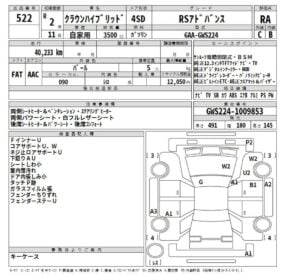
In the center of the sheet, you will see a cross-section schematic drawing of the vehicle. This is the Body Map. Inspectors use an array of letter-and-number shorthand codes to pinpoint exactly where scratches, dents, or rust are located on the car’s panels.
The Damage Scale (1 to 3+)
The letter represents the type of defect, while the accompanying number represents the severity (with 1 being minor and 3+ being severe).
-
A (Scratch): A1 is a minor hairline scratch that can usually be polished out. A3 is a deep scratch that penetrates the paintwork and requires a respray.
-
U (Dent): U1 is a tiny, pin-sized parking lot ding. U3 is a significant depression or large dent.
-
W (Repainted Panel): Indicates that a panel has been repaired in the past. W1 means a high-quality, professional paint match. W3 denotes a wave or uneven paint job that is visible to the naked eye.
-
S (Rust / Corrosion): S1 is minor surface rust. S3 is structural corrosion. Pro tip: Avoid S2 and S3 vehicles entirely, as rust spreads quickly once exposed to Kenya’s humid coastal entry points.
-
XX (Replaced Panel): This means the original panel (like a door or fender) was completely removed and replaced with a new one, often indicating a past collision.
3. Spotting the Red Flags (How Scammers Hide the Truth)
When shady brokers try to resell low-grade vehicles to unsuspecting buyers, they rarely show the original auction sheet. If they do provide one, they often employ tricks to obscure defects. Here is what you need to look out for:
The Blank Inspector Notes Box
In the bottom left or center-bottom section of the document is a field reserved for the inspector’s handwritten notes. Written in Japanese, this is where the inspector writes down critical defects like “engine knocking,” “oil leak,” “transmission slip,” or “smoky exhaust.” If a broker sends you an auction sheet where this box is heavily blurred, pixelated, or deleted, walk away immediately.
Odometer Discrepancy Marks
If the auction house discovers that a vehicle’s mileage does not align with its official Japanese history log, they will flag it. Look closely at the mileage box. If there is a “$” symbol, an asterisk (*), or a question mark stamped next to the odometer reading, it indicates that the true mileage is unknown or tampered with.
4. The Kenyan Direct Import Verification Step
You never have to guess whether an auction sheet is real. Because every vehicle has a unique Chassis Number (Frame Number) stamped permanently onto its engine bay or frame, you can verify its history programmatically.
Before a vehicle ever boards a roll-on/roll-off (RORO) vessel bound for Mombasa, it must also undergo a mandatory QISJ (Quality Inspection Services Japan) or EAA pre-export inspection to ensure compliance with Kenya Bureau of Standards (KEBS) guidelines.
At Cars For Sale, we cross-reference the original live auction sheet with these mandatory inspection certificates before processing any client deposits. If a vehicle fails to match its advertised parameters at the source port, the order is cancelled automatically.
Your Next Steps
Don’t gamble your hard-earned capital on a blind purchase. Sourcing your vehicle directly from global hubs is the safest, most financially sound way to buy a car—provided you have the right data by your side.
Every single listing inside our live Cars for Import to Kenya directory features verified, unedited history details. Found a car you like elsewhere online but aren’t sure about its history details? Send the link or chassis number to our import logistics specialists today, and we will pull the original sheet and translate the Japanese inspector notes for you completely free of charge.
Browse Available Direct Import Inventory Now
The author for this article is Robert Omwodo, our CEO and Director of Imports at Cars Request Africa.